




Different Doors, One Room: Why Mold, Metals, Stress, and EMF Can Feel the Same
Science
Mold, chemical exposure, heavy metals, chronic stress, radiation, chronic infection — these look like completely different problems. Yet they can produce strikingly similar illness. There is a reason, and it is oddly reassuring.
Six doors, one room
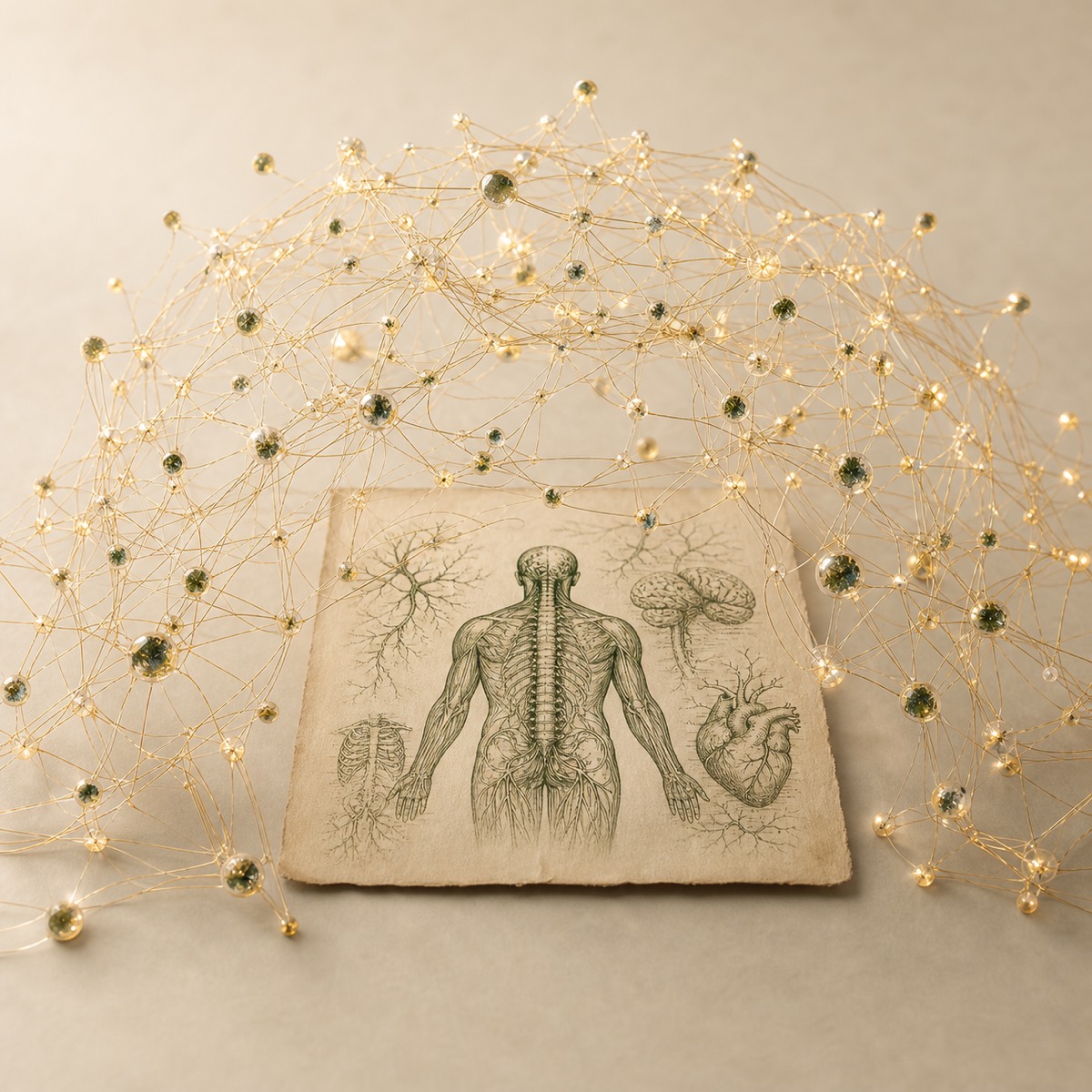
Each of these triggers enters through a different “front door” — a different sensor in the body’s danger network. But they all lead to the same room: the mitochondrial Cell Danger Response. Different entrances, one shared alarm.
Six doors, one room: every trigger converges on the mitochondrial Cell Danger Response. — Andrew Heyman, MD
Why the door still matters
Naming the door names the treatment lever — the pathway to intercept first. It also explains a common frustration: when several doors are open at once — say mold plus chronic stress plus a smoldering infection — a therapy aimed at only one of them underperforms.
Naming the front door names the lever: the pathway to intercept first, and the reason single-target therapy underperforms when several doors are open at once. — Andrew Heyman, MD
Stress is an exposure, too
This is why “just reduce your stress” is not a throwaway line. Chronic stress is not merely emotional — it recruits the very same danger network from the top down, and it drains the safety system that would otherwise switch the alarm off.
Stress is the top-down trigger: it floods the PAC1 danger receptor and drains the very VIP / α-MSH safety arm that would switch the alarm off — the mirror image of how a water-damaged building knocks that arm out from outside. — Andrew Heyman, MD
What this means for you
If you have done everything right for mold and stalled, more than one door may be open. The convergence is also the hope: because everything ends in the same room, the same core recovery — lower the load, rebuild reserve, restore the safety signal — applies no matter which doors let the danger in.