



Beyond CIRS: The Bigger Framework That Contains It
Science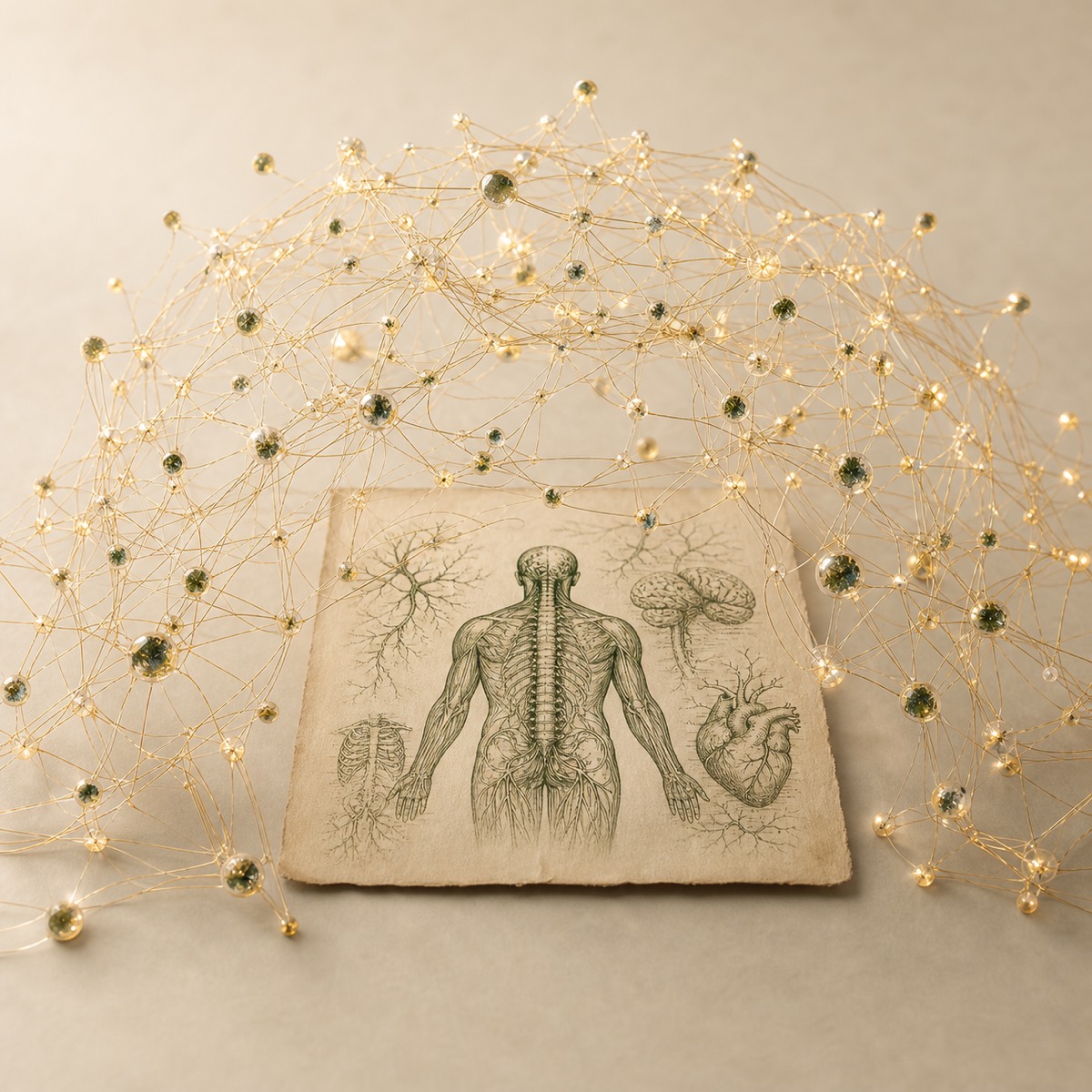
For a generation of people made sick by water-damaged buildings, one model changed everything: CIRS — Chronic Inflammatory Response Syndrome. It gave a name to an illness that mainstream medicine kept calling normal, and a protocol that helped thousands of people who had been sent to psychiatry with a shrug. That is a genuine, hard-won achievement, and nothing here takes it away.
But CIRS is a map drawn in the late 1990s and codified through the 2000s — before much of what we now know about mitochondria, danger signaling, and how the body ends inflammation. A deeper framework, the Cell Danger Response, has since caught up to it and, in an important sense, swallowed it whole. Not as a rival theory, but as the bigger map that contains the older one — and explains why the CIRS protocol works, why some people stall on it, and what the next generation of treatment can do that the old model could not.
What CIRS got right
In the 1990s, patients started arriving at clinics along the Chesapeake Bay with the same strange constellation: crushing fatigue, brain fog, body pain, dysautonomia, broken sleep, immune chaos. Their labs looked "normal." Ritchie Shoemaker, a family physician, took them seriously and built a reproducible framework around them.
His core insight was that a genetically susceptible subgroup couldn't clear biotoxins — largely from mold and other organisms in water-damaged buildings — and that this drove a sustained, self-perpetuating immune activation. Out of that came a real diagnostic system: a panel of biomarkers (C4a, TGF-beta-1, MSH, VIP, VEGF, MMP-9 and others), HLA-DR genetic typing, and a stepwise protocol — leave the exposure, bind toxins with cholestyramine, treat fungal overgrowth, address nasal colonization, correct hormones, and finally use VIP as a healing signal. Shoemaker's group even published gene-expression studies showing consistent patterns that shifted toward normal with treatment. For outpatient medicine, this was sophisticated science.
Where the old map runs out
The limits of CIRS aren't failures of clinical skill — they're the edges of what could be known when it was built. The model grew up around a single class of exposure and a single protocol pathway. It never offered a cellular account of *why* the treatment works. It predates the biology of mitochondrial signaling, purinergic "danger" signaling, and — crucially — the science of how inflammation is actively switched off. And its final step, VIP, works beautifully for some patients and does nothing for others, for reasons the model itself can't explain.
That last point is the tell. When a framework can't say why its best tool sometimes fails, it usually means a bigger framework is waiting underneath it.
The deeper framework: the Cell Danger Response
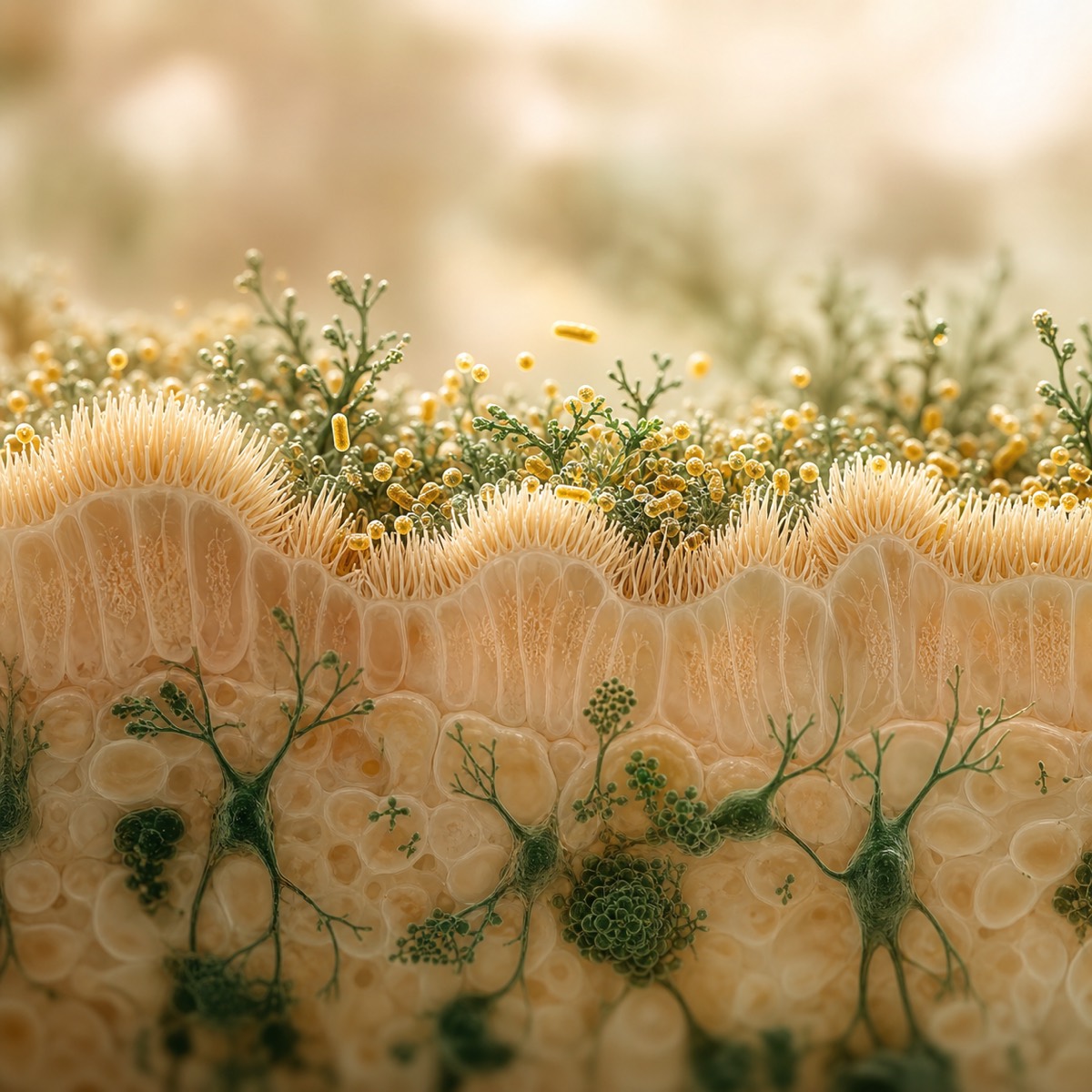
That bigger framework is the Cell Danger Response (CDR), described by Robert Naviaux at the University of California, San Diego. Its central claim is that mitochondria aren't just the cell's batteries — they're its threat sensors. When a cell meets serious danger — a toxin, an infection, an injury, even sustained psychological stress — the mitochondria trigger a coordinated defensive program: energy production shifts, the cell releases ATP as a danger signal, inflammation ramps up, and the whole cell reorganizes away from normal function and toward defense.
That program runs in three phases. CDR1 is the active alarm. CDR2 is a repair-and-conservation state. CDR3 is resolution — the deliberate "all-safe" signaling that switches the response off and returns the cell to normal. Health is completing that arc. And here is the reframe that changes everything: chronic illness is usually *not* the continued presence of the original threat — it's the failure of the CDR to finish its cycle and come back through CDR3. In plain terms, people with CIRS, ME/CFS, and long COVID are stuck in the alarm, unable to receive the signal that the danger has passed.
CIRS is not a rival to the Cell Danger Response. It is a special case of it — the first, hardest-won sketch of a much larger map. — Andrew Heyman, MD
The molecular "language" of that alarm is worth understanding, because it explains the single most confusing thing about mold illness. When cells are under threat, they push ATP — the same molecule they normally burn for energy — *out* through special channels, where it acts as a broadcast danger signal to every neighboring cell and immune cell. In many people with chronic illness, this signaling gets stuck on: the ATP alarm keeps blaring even after the original threat is gone. That is the cellular reason a person can move out of the moldy house, finish antimicrobials, pass every test — and still feel profoundly sick. The building is fixed; the alarm is not.
Total load, not a single trigger
One of the CDR's most practical upgrades is the idea of total load. In the CIRS model, biotoxin exposure is the trigger and the protocol is built around that one thing. But mitochondria don't sort threats by category — they add them all up. Mold, Lyme and its co-infections, heavy metals, reactivated viruses like EBV, childhood trauma encoded as chronic stress, poor sleep, even nutritional gaps each push on the same alarm.
This is why two people with nearly identical mold histories can respond to the identical protocol so differently. The cell is keeping a running total of every danger signal at once. Someone who has cleared the mold but still carries a heavy metal burden, a smoldering virus, and a heavy stress history will not finish the healing arc through the VIP step alone — because the alarm still has other things keeping it on.
Two discoveries, one destination
Part of what makes the CDR so persuasive is that it and CIRS were built almost entirely apart from each other — and still ended up in the same place. Through the late 1990s and 2000s, Shoemaker worked from the top down: real patients, reproducible biomarkers, a working protocol, and eventually gene-expression patterns that tracked with illness and recovery. Over roughly the same years, Naviaux worked from the bottom up: mitochondrial disease, metabolomics, and the biology of how a cell defends itself, culminating in his 2014 paper formally defining the three CDR phases.
By 2016 Naviaux had shown a CDR metabolic signature in ME/CFS that paralleled Shoemaker's CIRS gene-expression findings almost point for point — two different illnesses, two different labs, one underlying program. Then, from 2019 on, long COVID arrived as a mass danger-response event: millions of people driven into the same stuck-alarm state at once, with overlapping molecular features. A clinical model built from mold and a cellular model built from mitochondria had been describing the same thing from opposite ends. When independent roads meet like that, it's usually because they were headed for the same real destination.
Why every CIRS finding is what the CDR predicts
Read Shoemaker's biomarkers through the CDR and they line up almost perfectly with a danger response that's stuck on. Elevated C4a is complement activation — a front-line alarm effector. Elevated TGF-beta-1 reflects both the inflammatory alarm and the repair phase straining to remodel tissue. Suppressed MSH and VIP are exactly what you'd expect when the body's own resolution signals are depleted by an alarm that never ends. A dysregulated stress axis and low VEGF fall out of the same picture.
VIP itself becomes easy to understand: it's a *partial* CDR3 "all-safe" signal. It works when a patient's alarm has already been quieted and the only thing missing is that neuropeptide message. It fails when the underlying danger terrain is more complex — more inputs still active, mitochondria still struggling, the resolution machinery itself depleted. Two bodies of work built independently — one from a patient cohort, one from cell biology — converging this cleanly is a strong sign that both are onto something real, and that the CDR is the deeper of the two.
An honest turn: measure the mechanism, don't infer it
Here the adaptation follows the paper into its most important and least comfortable move. That convergence story is *corroboration*, not proof — and leaning on CIRS's original biomarkers to prove the CDR quietly imports their weaknesses. So the position paper deliberately stops carrying the argument on proxy markers and re-grades several long-standing CIRS claims as weak.
- HLA-DR genetic susceptibility — an unreplicated association, and a fixed "you were born vulnerable" gene model is the wrong shape for what the CDR actually describes: an acquired, dynamic loss of tolerance that can change over time.
- MARCoNS — the nasal "superbug" blamed for perpetuating CIRS is a near-universal resident of normal noses; a test that's positive in almost everyone can't identify a disease-specific culprit, and the mechanism once proposed for it doesn't hold up.
- The protocol as a whole — the full sequence has never been tested as one integrated treatment in a controlled trial against the honest comparison: leaving the exposure and giving it time.
The replacement isn't cynicism — it's better measurement. Instead of inferring the cell's state from a shadow, the CDR-based approach measures the mechanism directly: mitochondrial stress signals, the cell's actual real-time energy output (extracellular flux), and markers of tolerance. Measure what the cell is doing, rather than guessing from a downstream marker that may not mean what we assumed.
A five-phase model for recovery
All of this resolves into a structured, five-phase progression that maps the CDR's biology onto a treatment sequence — and it's the clearest answer to why uniform protocols help some people and strand others.
- Phase 1 — Total Load Mapping. Purely diagnostic: characterize the entire danger landscape across roughly seven domains — environmental toxins, infections, mitochondrial function, purinergic signaling, resolution biology, stress/epigenetic load, and structural barriers like MCAS, POTS, and hypermobility. No treatment yet. Starting the protocol before this map is complete is one of the main reasons people plateau.
- Phase 2 — Turning the alarm down. Reducing the active danger signals. The classic CIRS steps live here — but expanded to cover the whole threat map, not just mold.
- Phase 3 — Rebuilding the engine. Mitochondrial and structural repair, so the cell has the capacity to heal.
- Phase 4 — Preparing the ground for resolution. Restoring the body's own "stand-down" machinery so that a resolution signal can actually land.
- Phase 5 — Phenotype-guided "all-safe" signaling. Personalized resolution, delivered only after a gate: each patient is matched to one or more resolution phenotypes before receiving the specific signals they need.
Phase 4 deserves a moment, because it's the part CIRS never had. For a long time, medicine assumed inflammation just fades when the threat is removed. It doesn't — ending inflammation is an *active* process, run by a family of molecules called specialized pro-resolving mediators (the resolvins, protectins, and maresins first mapped by Charles Serhan at Harvard). They tell immune cells to switch from attack mode to cleanup-and-repair mode. When that machinery is depleted — as it appears to be in ME/CFS, post-Lyme, post-COVID, and likely CIRS — resolution can't happen even with no threat left to fight. The good news is that this machinery can be rebuilt, largely through the omega-3 fats it's made from and other resolution-phase nutrition. You are, in effect, restocking the body's off switch before you try to flip it.
That gate between Phase 4 and Phase 5 is the heart of the whole model. Rather than giving everyone the same final step and hoping, it first asks *which kind of stuck* a person is:
- Neuropeptide-depleted — the alarm is otherwise quiet and the missing piece really is a signal like VIP. (These are the patients the classic protocol cures.)
- Mitochondrial-arrested — the engines are too depleted to resolve; they need repair before any "all-safe" signal can work.
- Resolution-deficient — the pro-resolving machinery itself is missing and has to be rebuilt.
- Neuroimmune-dysregulated — mast cells and an overtuned nervous system keep re-triggering the alarm.
- Epigenetically-encoded — an early-life or trauma-encoded stress pattern holds the response open.
Only then does it choose the signal to match. That's how precision medicine becomes something you can actually do in clinic — and it's the most direct explanation for why one-size-fits-all protocols leave a real fraction of patients behind. The same final step that cures the first group does nothing for the other four, not because they didn't try, but because they were a different kind of stuck.
What this means for you
If you've done a standard mold-illness protocol and stalled, this framework offers a more useful story than "you didn't try hard enough." It usually means either a driver of the alarm was never mapped, or your particular kind of stuck needs a different resolution signal than the one you were given. Neither is a dead end — both are addressable once you know to look for them.
None of this diminishes CIRS. It promotes it — into a bigger, mechanism-first framework that explains the successes, accounts for the failures, and points at what to measure and do next. The old map got people to shore. The new one shows the whole coastline.