




Education
Understanding mold illness
Plain-language articles on what mold illness is, how it's tested, what to do about your home, and how recovery works.
Science
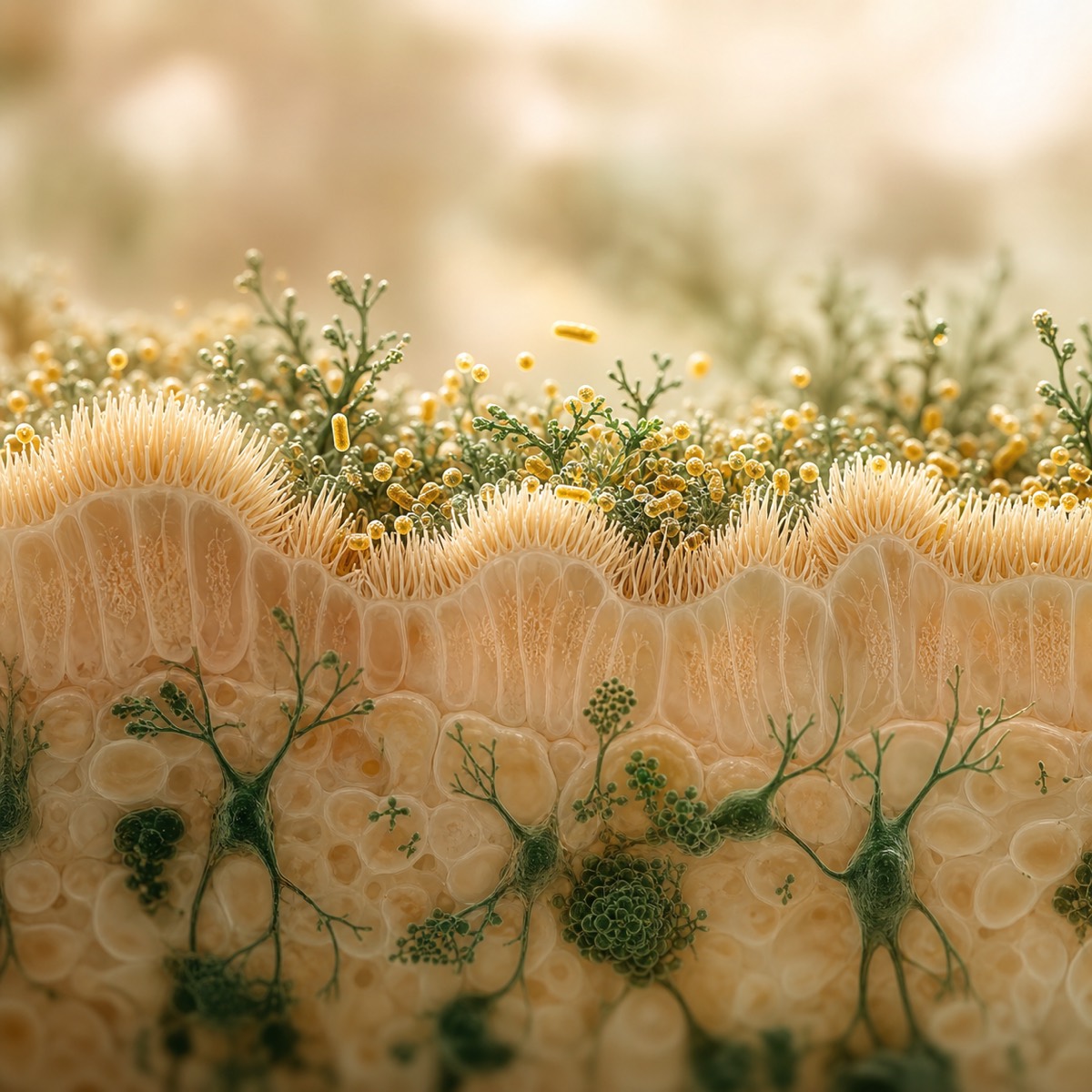
Your Nose Is an Immune Organ, Not a Battlefield
In mold-illness circles the nose gets treated like a battlefield — swab it, find a resistant bug, wage antibiotic war. The newer science says the nose is something else: a sentinel immune organ whose health is defined by tolerance.
Science
Your Cells Speak in ATP: The Danger Signal That Keeps the Alarm On
You can leave the moldy building, clear the infections, pass every test — and still be sick. The reason is a molecule you know as the body's energy currency: ATP. Under threat, cells turn it into an alarm that re-arms itself.
Science
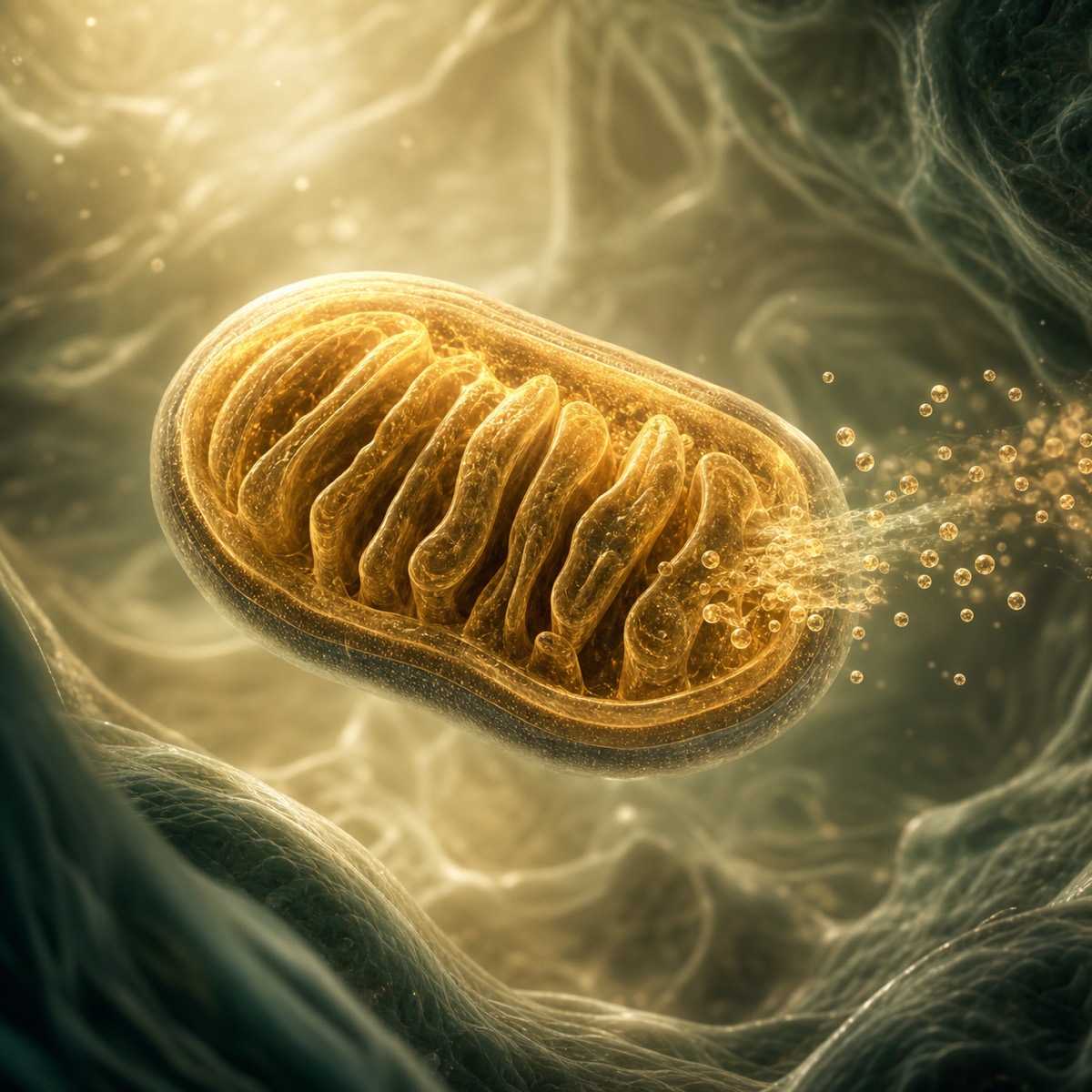
The Fatigue Has a Name: The Mitochondrial Distress Hormones GDF15 and FGF21
The most dismissed symptom of mold illness is fatigue — "just tired," "deconditioned." But this fatigue isn't the absence of energy. It's an active signal your mitochondria broadcast into the blood, and it has chemical names.
Recovery
Flat Is the Illness: Why Recovery Means Getting Your Rhythms Back
We picture recovery as climbing back to a number — enough energy, normal labs. The chronobiology of the Cell Danger Response says something stranger: health isn't a level, it's a rhythm. Being sick is being flat.
Science
Beyond CIRS: The Bigger Framework That Contains It
CIRS gave mold illness a name and a protocol that helped thousands. The Cell Danger Response is the bigger framework that contains it — explaining why the protocol works, why some people stall, and what comes next.
Science
The Carcinogen in the Air: Mold and Cancer Risk, Honestly
Ask whether mold causes cancer and you’ll find both panic and dismissal. The honest answer is calmer and more useful than either — and it hinges on the difference between a toxin’s potential and your actual exposure.
Diagnosis
The Pain That Doesn’t Make Sense: Mold, Fibromyalgia, and Three Kinds of Pain
Mold pain is easy to misattribute — it moves, it spreads, it doesn’t match an injury. And fibromyalgia, the diagnosis many people land on, overlaps almost completely with mold illness. For some, that’s a clue to a treatable cause inside an “idiopathic” label.
Science
Fire in the Brain: Mold, Brain Fog, and Why It’s Not “In Your Head”
The fog, the lost words, the memory that won’t hold — the cognitive symptoms of mold illness are the most dismissed and the most frightening. They are not psychosomatic. Mold toxins have a startlingly direct route into the brain.
Science
When the Body Attacks Itself: The Mold–Autoimmunity Connection
If an autoimmune condition appeared or worsened around a mold exposure, you may have wondered whether they’re related. It’s one of the most mechanistically plausible, least studied links in the field — and here’s the honest version.
Diagnosis
When the Automatic Becomes Unreliable: Mold, POTS, and Dysautonomia
A racing heart when you stand, lightheadedness, the sense your brain “goes offline” upright — these are hallmarks of dysautonomia and its best-known form, POTS. In mold illness they’re common, and there’s a difference between managing them and treating the cause.
Science
Mold and “Unexplained” Infertility: The Under-Recognized Reproductive Link
“Unexplained” infertility means the standard workup came back normal — not that there’s no cause. Mold toxins are one of the most under-recognized causes to consider, especially with a water-damage history.
Lifestyle
Why You Can’t Lose Weight in Mold Illness — And Why It’s Not Willpower
You’re eating carefully, moving when you can, and the weight won’t budge — or it climbs. In mold illness that isn’t a discipline problem. It’s endocrine disruption, and it responds to the biology, not to eating less.
Science
Why Even Good Evidence Struggles to Become Standard Care
If this approach is right, why isn’t it standard care yet? The honest answer is illuminating — and it isn’t the one the “it’s not proven” crowd assumes. Medicine is slow by design, the trial system fits drugs (not staged personalized care), and the economics work against it.
Diagnosis
Why 18 Months of Mold Illness Usually Means More Than Mold
If you’ve been sick a long time and treating the mold hasn’t been enough, that may not be a failure of effort. Long-standing mold illness rarely stays a mold-only problem — the danger state lets other alarm-drivers move in.
Recovery
Sleep Is Where the Brain Clears the Toxins: The Glymphatic System and Mold Brain Fog
In mold recovery, sleep is usually treated as the backdrop while the “real” treatments work. That’s backwards. The brain physically flushes its waste — including mold-related metabolites — mainly during deep sleep, which makes sleep one of the treatments.
Recovery
The Nervous-System Toolkit: A Low-and-Slow Menu for Retraining the Alarm
If your nervous system is stuck in alarm, no supplement rewires it — only practice does. But the practices aren’t a curriculum to complete; they’re a menu to choose from, matched to the state you’re actually in.
Recovery
Why the Alarm Won’t Reset on Its Own — and the Asymmetry You Can Exploit
Even after you remove the exposure, the nervous system can keep ringing the alarm. There’s a reason — danger signals are constant while safety signals only arrive in pulses — and it points straight at why recovery takes frequent, deliberate practice.
Science
An NNT of Eight Can Mean a Near-Cure in One Patient and Nothing in Seven
There’s a number hiding behind every “this protocol works” claim in medicine — and it explains why the same mold treatment can cure your friend and do nothing for you. Meet the Number Needed to Treat, and the secret it keeps.
Science
Is Mold Illness “Real”? What the Evidence Actually Shows
If you’ve been told mold illness “isn’t recognized,” it helps to separate two very different questions — because the honest answers point in opposite directions. The illness is real and the biology is credible; the specific protocols are promising but still earning their rigor.
Science
CIRS Was Right — for 2004: The Shift to the Cell Danger Response
The CIRS model was real, pioneering work. It’s also worth understanding why being right in 2004 isn’t the same as being complete now — and why the newer Cell Danger Response framework contains CIRS rather than contradicting it.
Science
Why “Normal” Lab Numbers Can Hide a Sick Body
Your labs come back “normal,” yet you feel unwell. It’s easy to conclude nothing’s wrong — or that it’s all in your head. There’s a deeper possibility: what broke isn’t the level. It’s the rhythm. And a flat line can average out to a perfectly normal number.
Science
Why Each Mold Exposure Hits Harder Than the Last
Patients describe a staircase of decline — each new building, illness, or stressful season producing a bigger reaction than the one before. A fixed gene can’t explain a moving target like that. Your immune system’s memory can.
Science
How the Alarm Eats Its Own Off-Switch
A single exposure shouldn’t keep you sick for years — unless the alarm has learned to destroy the very system that would shut it off. That feed-forward trap is why chronic illness gets “stuck,” and why it can be reversed at more than one point.
Science
Is EMF a Real Health Trigger? An Honest Look at the Weakest Link
Among the exposures blamed for chronic illness, electromagnetic fields are the one where the science hasn’t settled. Here’s the honest version — where a real signal might be, where the popular mechanism is contested, and how to weigh a hypothesis-level trigger.
Treatment
Leaky Gut Isn’t Optional Supplementation — It’s Removing an Alarm
Gut repair often gets treated as a nice-to-have. In mold illness it’s the opposite: a leaky gut is a source of daily inflammatory alarm that keeps you sick even after you’ve left the building — and sealing it shuts off one of the alarm’s last inputs.
Prevention
Remove, Don’t Sterilize: The Counterintuitive Science of Cleaning a Sick Home
When you discover your home is making you sick, the instinct is to reach for the strongest disinfectants and wage war. For a person with mold illness that instinct is usually exactly wrong — because a dead spore is still an inflammatory particle.
Treatment
The Home Is the First Patient: Remediate or Relocate Before Anything Else
In mold recovery there’s one rule that comes before every supplement, medication, and protocol: you cannot treat a body that’s still being exposed. It can feel backwards to start with contractors and dust samples — but the sequence isn’t optional.
Treatment
The All-Safe Signal: VIP, α-MSH, and the Molecules That Tell the Body to Stand Down
In the final phase of recovery, treatment shifts from clearing threats to sending one message the body has been unable to receive: you are safe. That message is carried by specific molecules — and getting them to land is the last, most delicate step.
Treatment
Methylene Blue: The 100-Year-Old Dye That Reroutes Your Cellular Wiring
One surprising tool in mitochondrial recovery is a blue dye first made in 1876. In tiny doses it can hand electrons directly to your cells’ energy machinery, bypassing a bottleneck the illness creates. It’s genuinely clever — and comes with real cautions.
Treatment
Rebuilding the Engine: The Mitochondrial Cofactors That Restore Energy
Once the alarm is quiet and the hidden triggers are cleared, there’s a genuinely constructive phase: rebuilding the cellular engines the illness ran into the ground. This is where energy comes back — in a specific order, and measurably.
Treatment
Why “Boosting” Your Immune System Can Backfire
When you’re chronically ill, “boost your immune system” is everywhere. In one common form of mold illness, that advice isn’t just unhelpful — it can set off a flare, because the problem is a dysregulated system, not a weak one.
Treatment
Blocking Inflammation Isn’t the Same as Ending It
If you’ve thrown everything at your inflammation and it keeps coming back, the reason may not be about dosing harder. Switching inflammation off is an active program — and when that program is weak, the fire lingers no matter how much you block it.
Testing
The Ready-to-Heal Gate: Knowing When Your Biology Can Actually Heal
The hardest question in a long illness is deceptively simple: how do you know when your body is truly ready to heal — versus just having a good week? In this framework, that question has an objective answer, and one marker usually decides it.
Testing
The Same Number, Opposite Meanings: How to Read the CIRS Lab Panel
The classic mold-illness panel has about eight markers, and the standard habit is to count how many are abnormal and call the total “inflammation.” That misreads the panel — because the markers were never measuring one thing.
Testing
Visual Contrast Sensitivity: What a Screen Test Can — and Can’t — Tell You
The gray-stripes contrast test is a fixture of mold screening. It’s genuinely useful and genuinely easy to misunderstand. Here’s the honest version of what it measures, why it’s sensitive but not specific, and why calibration is the whole game.
Testing
Beyond ERMI: Why a Building Can “Test Fine for Mold” and Still Make You Sick
You test your home, the mold numbers look acceptable, and you still get sick inside it. That isn’t a mystery or a testing failure — standard mold tests measure only one of several potent triggers a water-damaged building produces.
Testing
Spare Respiratory Capacity: Measuring Your Cellular Reserve Directly
“Reserve” is the hidden capacity that decides whether an ordinary stress is shrugged off or triggers a crash. It sounds abstract — but there’s a test that measures it directly, and it explains why your energy labs can read “normal” while you crash after any exertion.
Testing
When Your Genes Lie: Why Gene-Expression Tests Can Point Backwards
Gene-expression panels promise to read your genes’ activity and infer what your cells are doing. In mold illness, that inference can point exactly the wrong way — an exhausted cell often ramps its energy genes up precisely because its energy machinery is failing.
Science
Not Just Mold: The Mycotoxins, and Which Organ Each One Hits
The illness isn’t driven by “mold” in the abstract — it’s driven by specific chemical toxins different molds produce, each with its own target in the body. And a quirk of biology explains why the burden lingers long after you’ve moved out.
Science
The Invisible Ecosystem: What a Water-Damaged Building Actually Puts in the Air
When people picture mold illness, they picture mold — black spots on a wall. But the spots are the least of it. A water-damaged building produces an entire living ecosystem of biological triggers, and your HVAC delivers it to every room.
Science
The Depression That Isn’t Psychological
Many people with mold illness are told they’re depressed, put on antidepressants, and find they don’t help. Sometimes that’s because the “depression” is a virus-driven, biological state — and the medication is aimed at the wrong target.
Diagnosis
Cleared but Not Cured: When Every Test Improves and You Still Feel Sick
There’s a stage of recovery that’s uniquely maddening: you’ve left the exposure, treated the infections, rebuilt your energy, your labs are finally improving — and you still feel sick. It isn’t failure. It’s the closed gate, and it has a fix.
Science
Why a Smell, a Storm, or a Bad Night’s Sleep Can Wreck You
Mold patients describe an eerie sensitivity — a drop in barometric pressure, a stranger’s perfume, one bad night’s sleep, a little too much exertion — each able to trigger a disproportionate crash. It’s real, it’s specific, and it runs on five sensors.
Diagnosis
Why Mold Is an Inflammatory — Not an Allergic — Illness
For a century, medicine has filed mold under “allergy.” For the sickest patients, that single filing points doctors toward the wrong tests and the wrong treatments — because the real problem isn’t an allergy at all.
Diagnosis
The Hair-Trigger Immune System: Mold and Mast Cell Activation (MCAS)
Foods you’ve eaten for years, perfumes, temperature changes, even exercise suddenly set off flushing, hives, or a racing heart. That bewildering new reactivity has a name — MCAS — and mold is one of its most potent drivers.
Recovery
Validation Is a Dose of Medicine: The Second Wound of Mold Illness
Almost everyone with mold illness carries a second wound layered over the first: not being believed. Being disbelieved isn’t only painful — it activates the same brain circuits as physical pain and helps keep the body’s alarm switched on.
Science
Different Doors, One Room: Why Mold, Metals, Stress, and EMF Can Feel the Same
Mold, chemicals, heavy metals, chronic stress, and infection seem like unrelated problems — yet they produce strikingly similar illness. They enter through different “front doors,” but they all end up in the same room: the cell’s danger response.
Testing
The MARCoNS Myth: Why Attacking a Nasal “Superbug” May Be a Mistake
Many mold patients endure weeks of antibiotic nasal spray to eradicate “MARCoNS.” But the organism is present in nearly everyone, several of its relatives are protecting you, and its signature mechanism is biochemically false. The nose is terrain, not a target.
Treatment
Why Order Matters: The Five Phases of Mold Recovery
One of the most common reasons mold recovery stalls has nothing to do with which supplements you take — it’s doing the right things in the wrong order. Recovery is a biological sequence, not a menu, and the sequence is the treatment.
Diagnosis
One Illness, Four Recoveries: The Four Phenotypes of Mold Illness
Two people with the same mold illness can need completely different treatments — and that’s why one recovers on a protocol that does nothing for the other. The Cell Danger Response can stall at four distinct points, and each needs a different final push.
Science
Why You Feel Far Sicker Than Your Lab Results Look
Feeling profoundly ill while your standard labs read “basically normal” is one of the loneliest parts of mold illness — and it’s used to dismiss patients. There’s now a molecular explanation, and it runs through your brainstem.
Lifestyle
There Is No “Mold Diet”: Why Cutting Every Fermented Food Is Based on a Myth
The strict “no fermented foods, no fruit, no yeast” rules that dominate mold-illness advice rest on a cross-reactivity theory that simply isn’t true. Here’s what the evidence actually supports — and why adding fiber matters more than banning yogurt.
Recovery
Rest Is the Treatment: Why Pushing Through Fatigue Backfires in Mold Illness
Our whole culture says the way out of fatigue is to push through it. In one common form of mold illness, that instinct is not just unhelpful — it can cost you days, and a heart-rate guardrail plus honest pacing does more than any workout.
Science
It Was Never Just Your Genes: Rethinking Who Gets Mold Illness
For twenty years, mold illness has been blamed on inherited immune genes said to trap biotoxins in one in four people. Examined closely, that claim doesn’t hold up — and the more accurate picture is far more hopeful: susceptibility is largely acquired, and largely rebuildable.
Science
The Cell Danger Response: Why Mold Illness Is an Alarm That Won’t Shut Off
Chronic mold illness is usually described as toxins lingering in the body. The deeper — and more hopeful — story is that it’s an ancient survival program that switched on for a real reason and never received the signal that the danger has passed.
Diagnosis
Why a Symptom Checklist Can’t Diagnose Mold Illness
The standard mold-illness screen counts symptoms and sorts them into thirteen “clusters” — but those clusters were never derived by any statistical method, and the test has never been shown to tell mold illness apart from the conditions it mimics. A look at what the instrument’s own papers actually say — and what a real diagnosis requires.